
Calderas, thermal hot springs and lush, green beauty ~ in 6 days
The lush Azorean archipelago is but a simple hop from North America - a direct flight of 4 hours generally. The largest and most visited island of the archipelago is São Miguel, a wonderful showcase of what’s in store across the Azorean islands. Made up of 9 islands in total, the chain is located 1200 km (740 miles) west of Portugal on a latitude with mainland Portugal and Virginia. Its mild marine climate dipping towards mediterranean warmth makes this “Hawaii of the Atlantic” a high recommendation from us for your future travels.
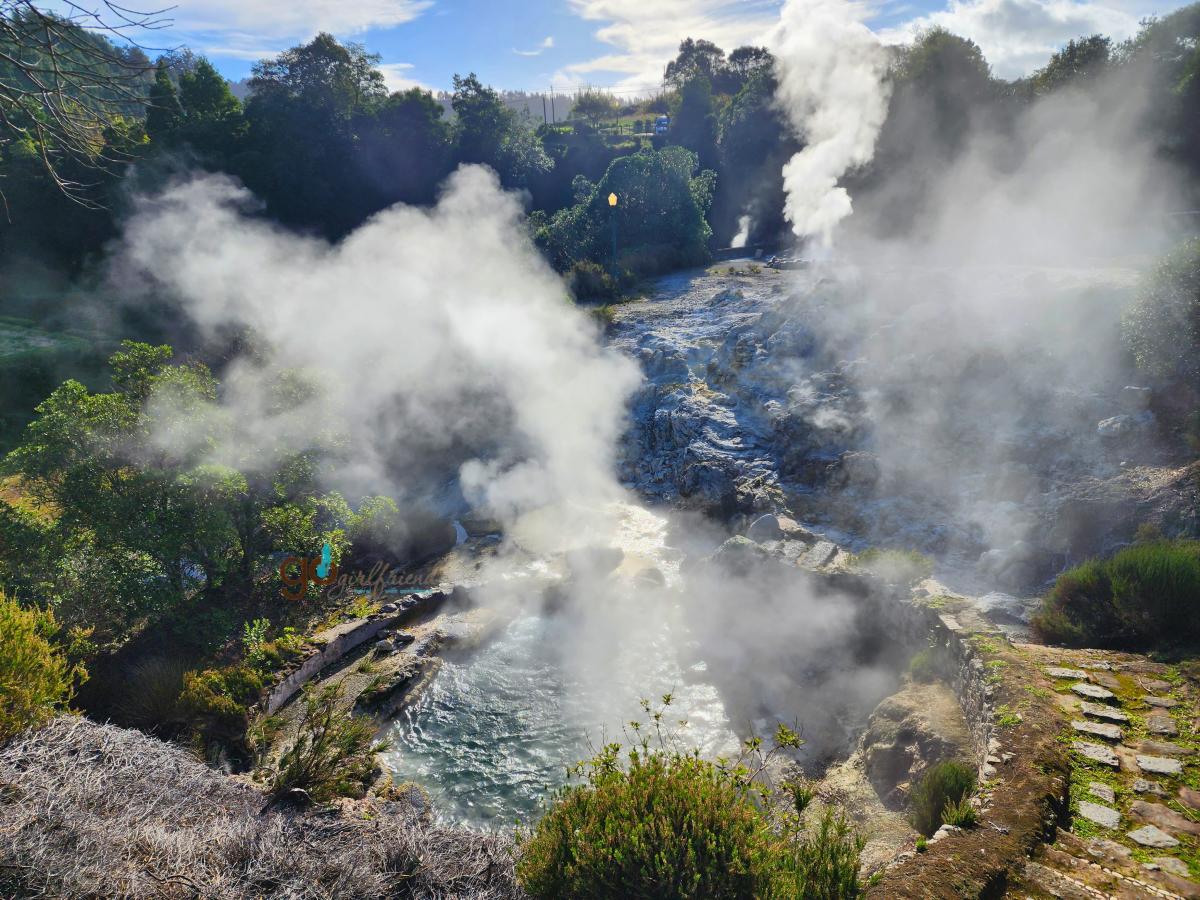 Located on the convergence of the Eurasian and African tectonic plates, exploring these islands are a treat for earth science enthusiasts. São Miguel offers breath-taking volcanic calderas, active geo-thermal vents (and the hot springs that go along with it) and green rolling hillsides that make for sightseeing of a unique nature.
Let’s get some tactical steps out of the way before we tackle what sights we recommend including in your itinerary:
While São Miguel is a mid-size island 65 km (40 miles) long and 15 km (9 miles) wide, you’ll need a rental car once you arrive in order to see the island and explore. On a positive note, driving is North America style with right-hand side of the road driving. Depending on your driving skill, in European tradition, your car will typically be a standard.
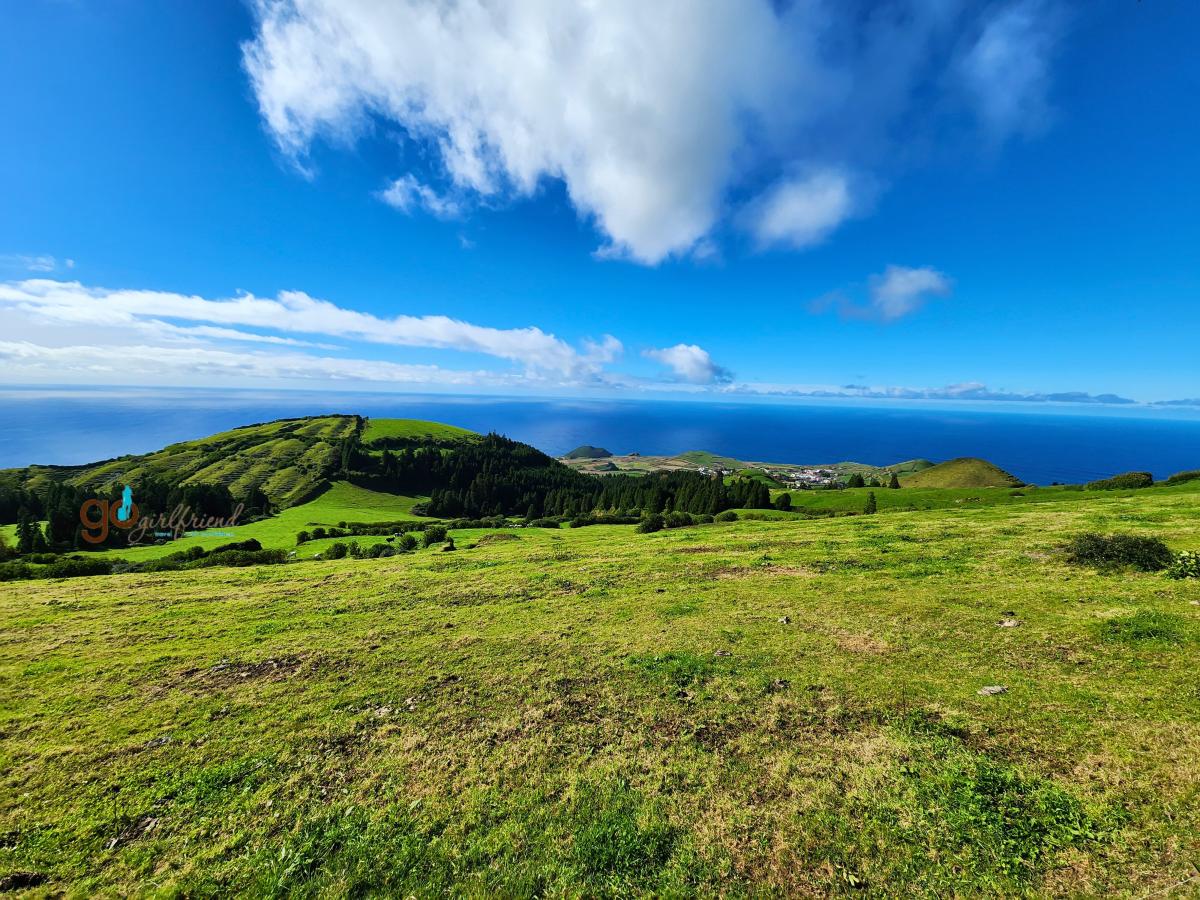
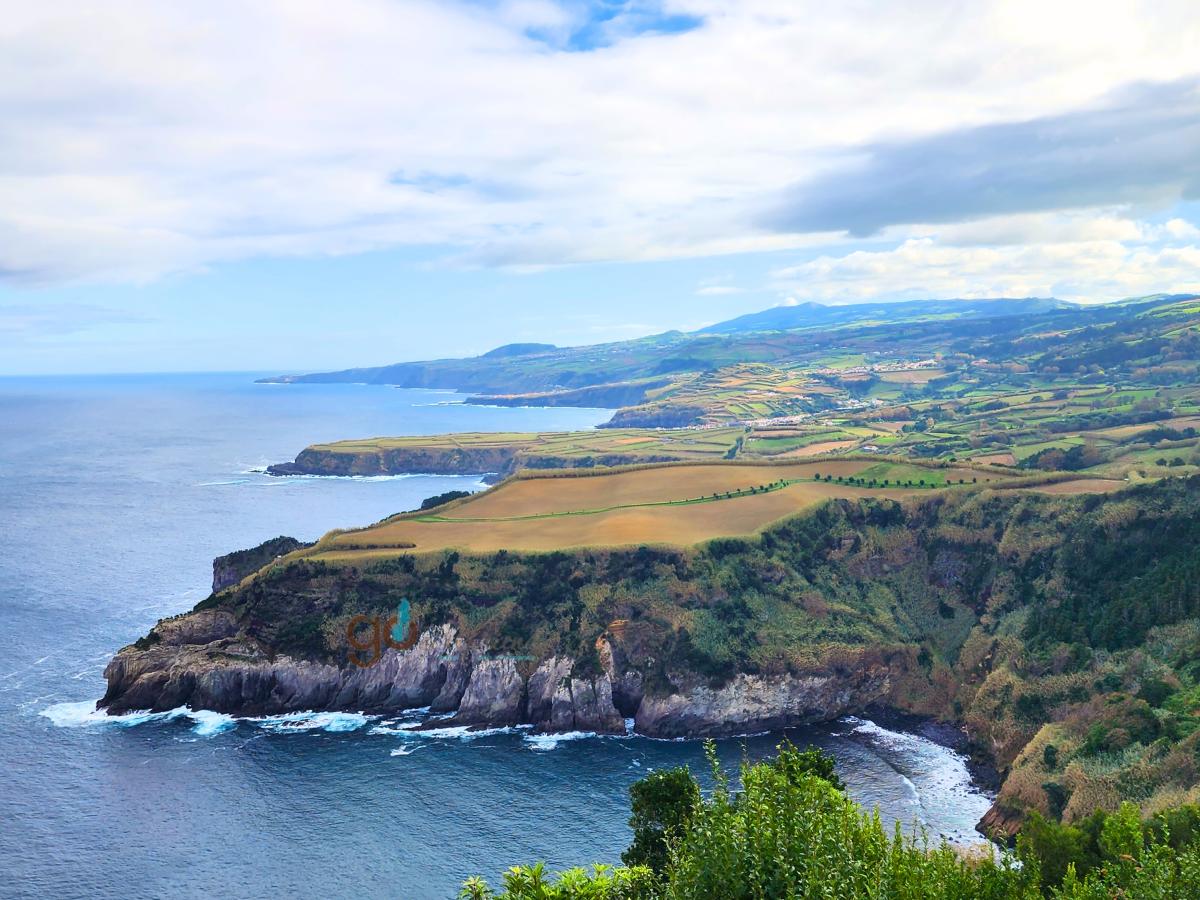 Roads are well maintained and driving conditions do not require extraordinary skill. Cliff-side views are abundant, but switchbacks and extra-narrow roads are not the norm. Mountains peak out at just over 1100 m (3620 ft) offering great views, but the countryside is green, lush and rolling rather than cliff, canyon and precipice - like Madeira.
The island is easy to access and small enough to navigate in day trips. Choosing a hotel as base operations becomes more of a preference of hotel amenities and features than required to access parts of the island.
While in Furnas or when you expect to be in Furnas, we recommend you sample the delicious Cozida Das Furnas stew cooked in the volcanic thermal vents. We recommend you stop by Tony’s Restaurant (rated one of the best cozidas in the area) to reserve your lunch in advance. Booking a day or two in advance is required!
Refer to our earlier post section on São Miguel ~ The Green Island for a comparison overview of São Miguel of the Azores and Madeira.
 Where to stay on São Miguel?
For us, we had one destination in mind while we traversed the island. The Terra Nostra Garden Hotel in Furnas with its iron-rich hot springs and lush diverse botanical gardens epitomized everything we believed São Miguel to be about – volcanic, thermal, lush and top of class - our goal destination!
 The Terra Nostra Garden Hotel isn’t a boutique hotel with unique decorating and one of a kind quirkiness. It delivers large-scale hospitality very well (like a Hilton class hotel). The rooms all have views of the lush gardens, and the restaurants are delicious options (oh, and the breakfast buffet is HUGE and delicious!). The amenities are numerous like you’d expect and at the end of your day, the Gardeners Bar is a wonderful place to enjoy a nightcap.
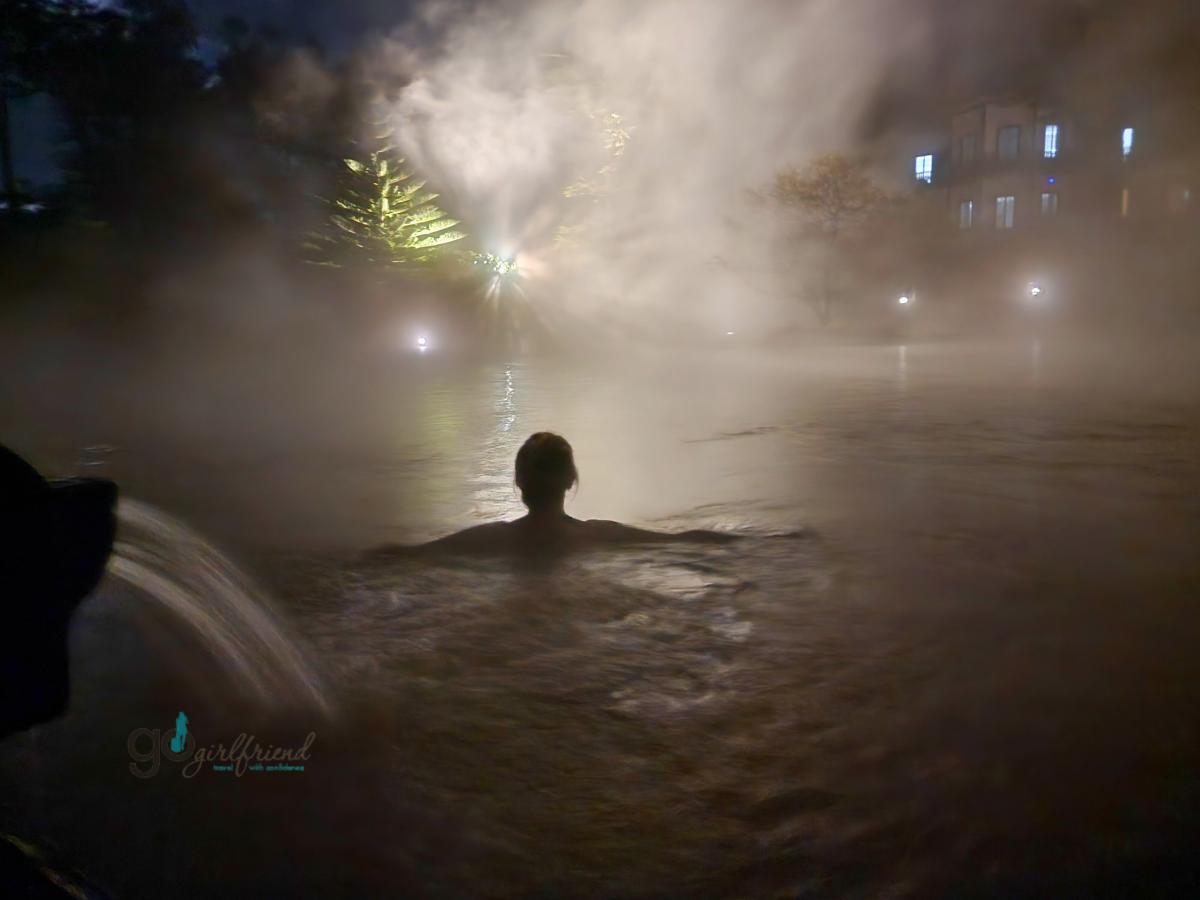
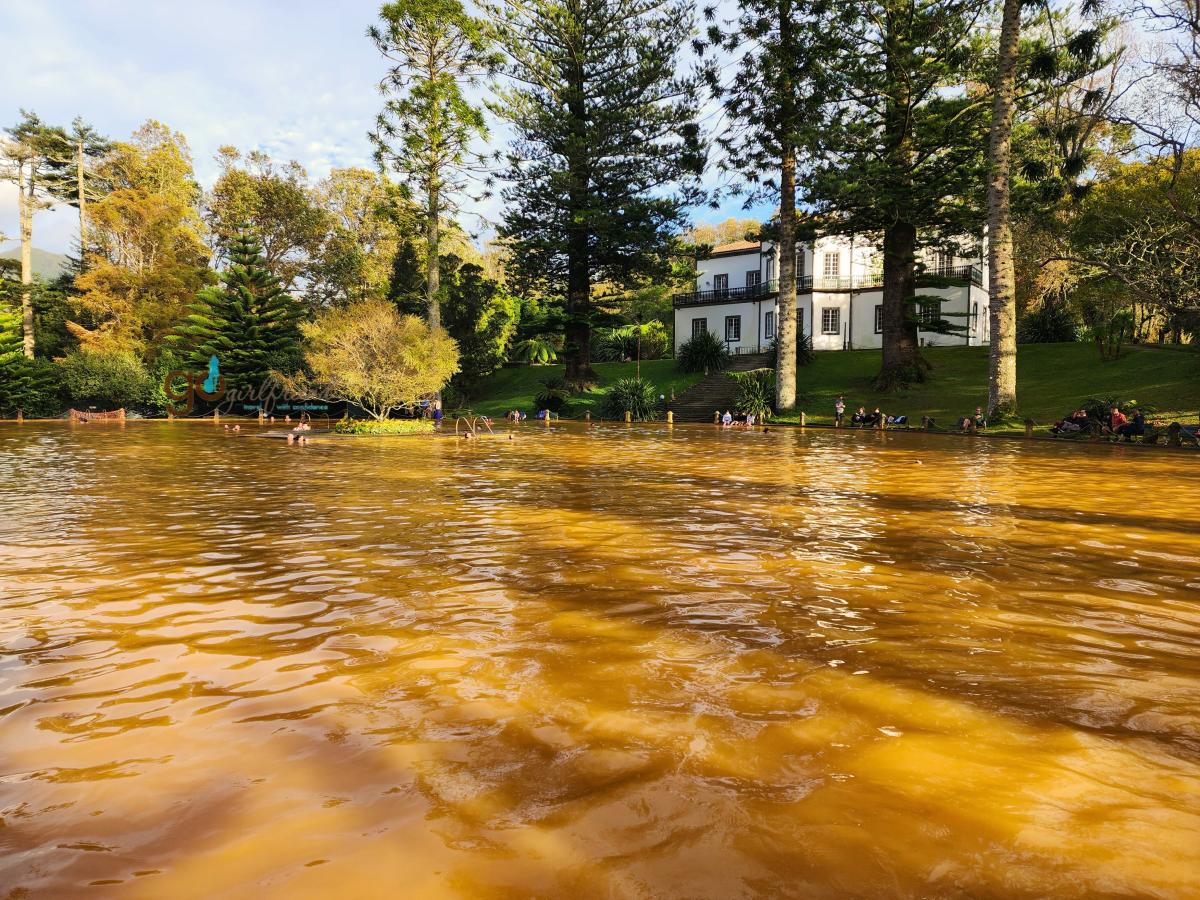 But the true reason for the Terra Nostra Garden Hotel as our choice was its one-of-a-kind volcanic, thermal pool and diverse botanical gardens. The thermal pool is a comfortable 35-40’ C (95-104’ F), enriched with natural minerals – especially its iron richness that displays the yellow-coppery hue to the pool – delivering minerals highly beneficial to the skin and wonderful relaxation. With the pools available 24/7 to guests of the hotel, a late-night soak can give a steamy, mystical, quiet end to the day.
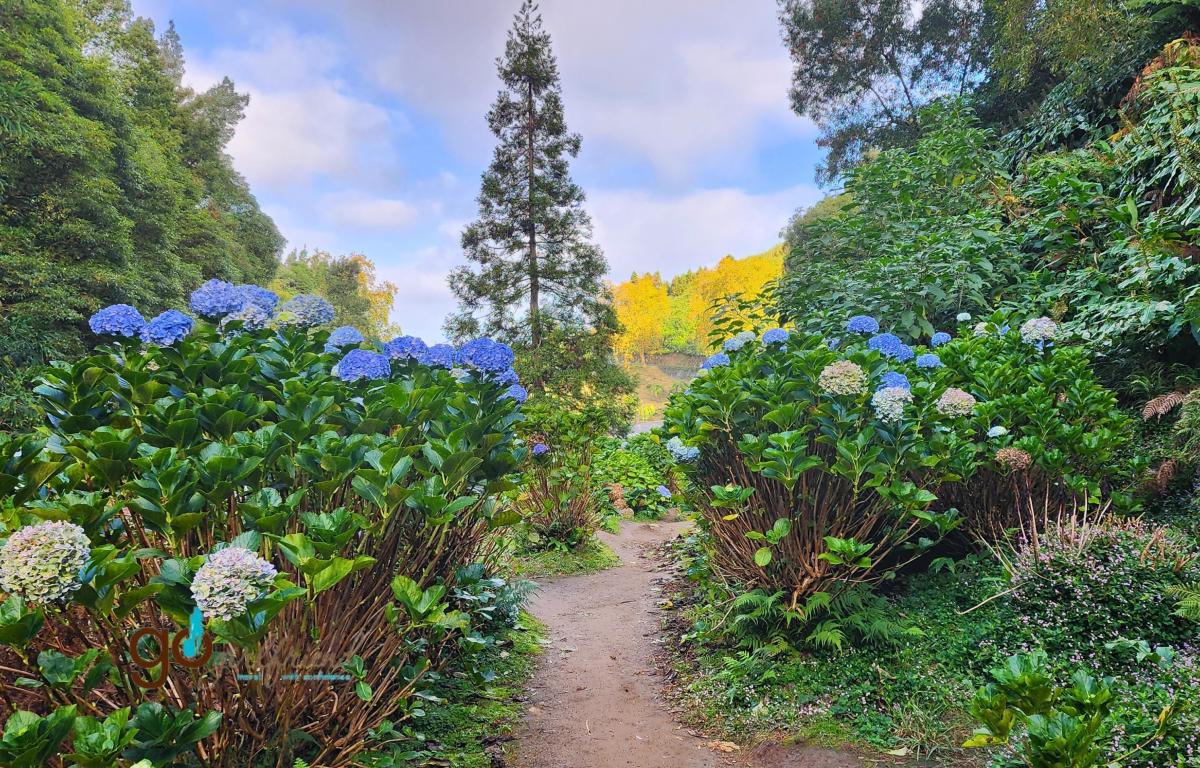
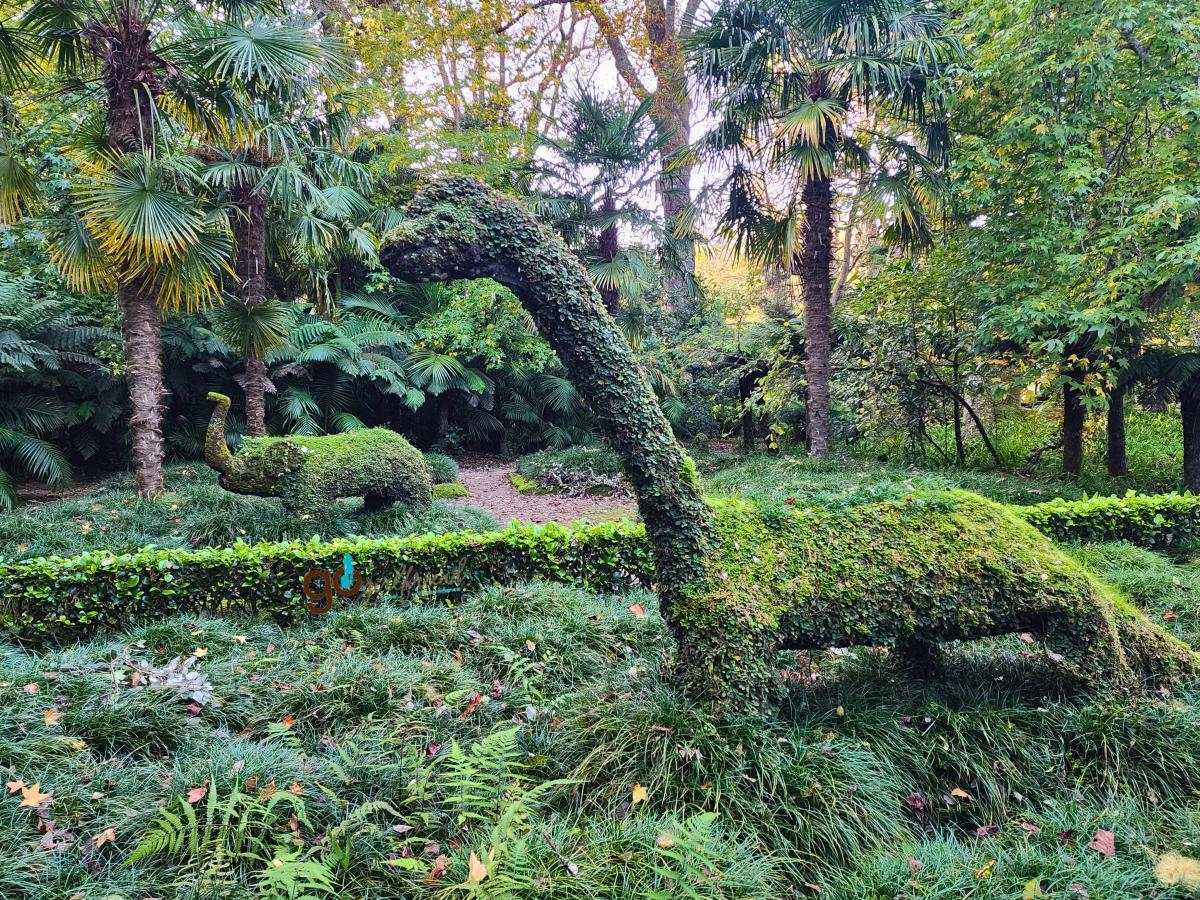 In addition to the iron-rich thermal pools are the centuries old botanical gardens offering rare species of flowers, plants and trees to enjoy, an avenue of ginkgo biloba to stroll and mystical topiary creations within the hidden pathways and pools to admire. A green retreat in so many ways – green for their philosophy and green for its lushness.
This is what we expected and were thrilled to receive as we based our travels at the Terra Nostra Garden Hotel.
What to do on São Miguel (of the Azores)?
The GoGirlfriend duo spent 6 days exploring São Miguel, crisscrossing the island exploring its landscape, tea plantations, hot springs and volcanic remnants. Through hiking, experiencing sunrise and sunset vantages, and exploring historic churches, local ceramics and thermal vent cozidas we touched upon food, culture and enjoyed their friendly local hospitality.
Here’s a 6-day itinerary to cover almost every aspect of the island …
Arrival Day 1 ~ the first look at São Miguel
Google Map route itinerary: https://maps.app.goo.gl/8KbD717YZbRiXWaB7 (Drive time: 1 hr, 15 min + time for stops)
- Get the luggage and rental car arriving at Aeroporto João Paulo in Ponta Delgada.
 Who doesn’t love some local craftsmanship in ceramics inspired by the island’s themes. Cerâmica Vieira offers local, handmade ceramics since 1962 and has a showroom a treat to walk through.
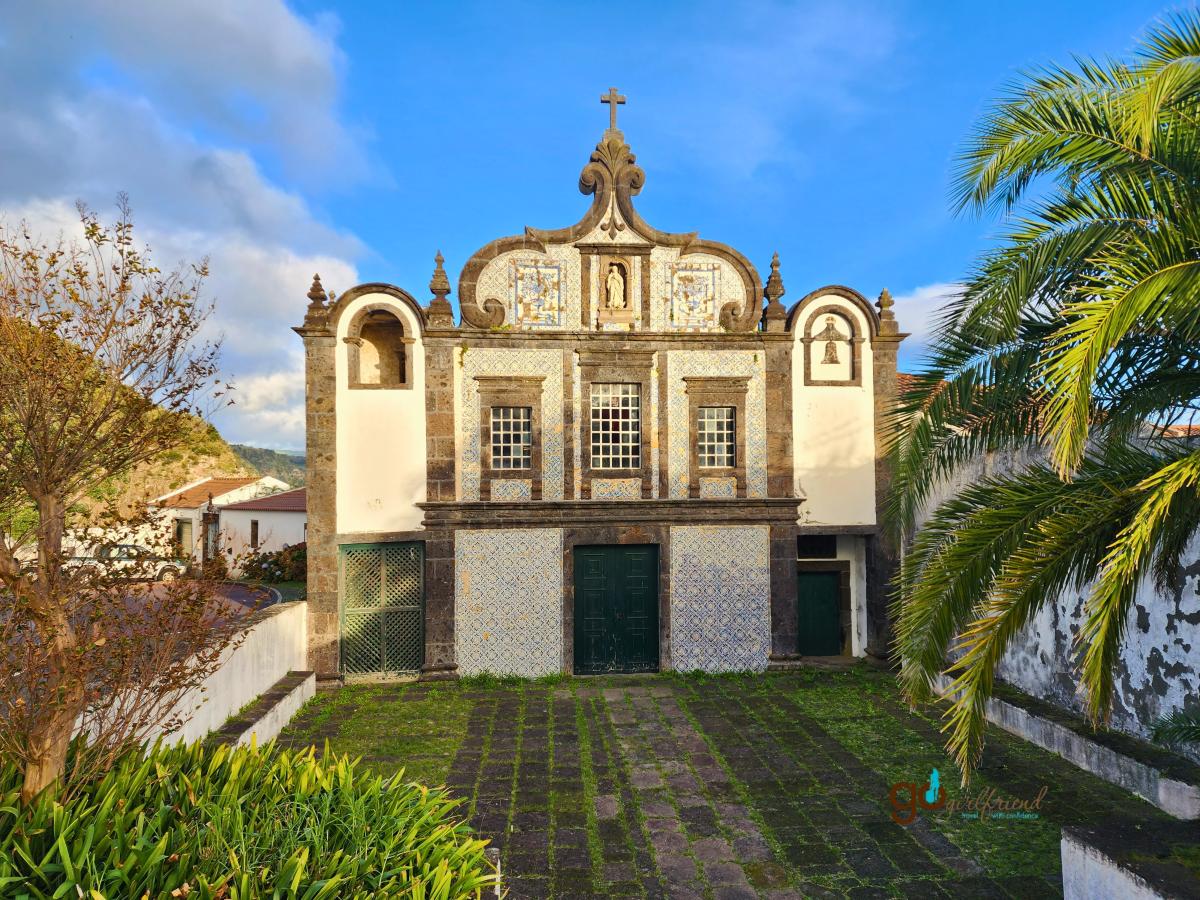
- Built in the 15th century and perched seaside, the Convent of Caloura is a historic stop as a marker in the early foundation of the Azores. Closed to the public when we visited, to see the 500+ yr old convent building and its beautiful seaside location is a historic treat.
- South-facing in the lee of the north Atlantic winds, Praia de Água D'Alto Grande samples you the beachiness of São Miguel’s south coast.
 A small, red brick, neo-gothic chapel (the Capela de Nossa Senhora das Vitórias) sits on the southern shores of Lagoa das Furnas within the botanical garden’s grounds. A short walk from the road and a peek inside the chapel gates reveals this haunting, fairy-tale tribute.
- Continue down the Caldera sides into the town of Furnas and the heart of São Miguel’s geothermal activity.
- Check into the Terra Nostra Garden Hotel and unwind with dinner outside on their patio at the Garnder restaurant – within the hotel.
- GoGirlfriend tip: Sample the hot Furnas Hot Spring cocktail as a nightcap at the Gardener Bar, what a delightful, tasty treat!
Day 2 ~ Sunrise on the eastern cliffs
Google Map route itinerary: https://maps.app.goo.gl/iWVgt4wn22yWz9sa9 (Drive time: 1 hr, 50 min + time for stops)
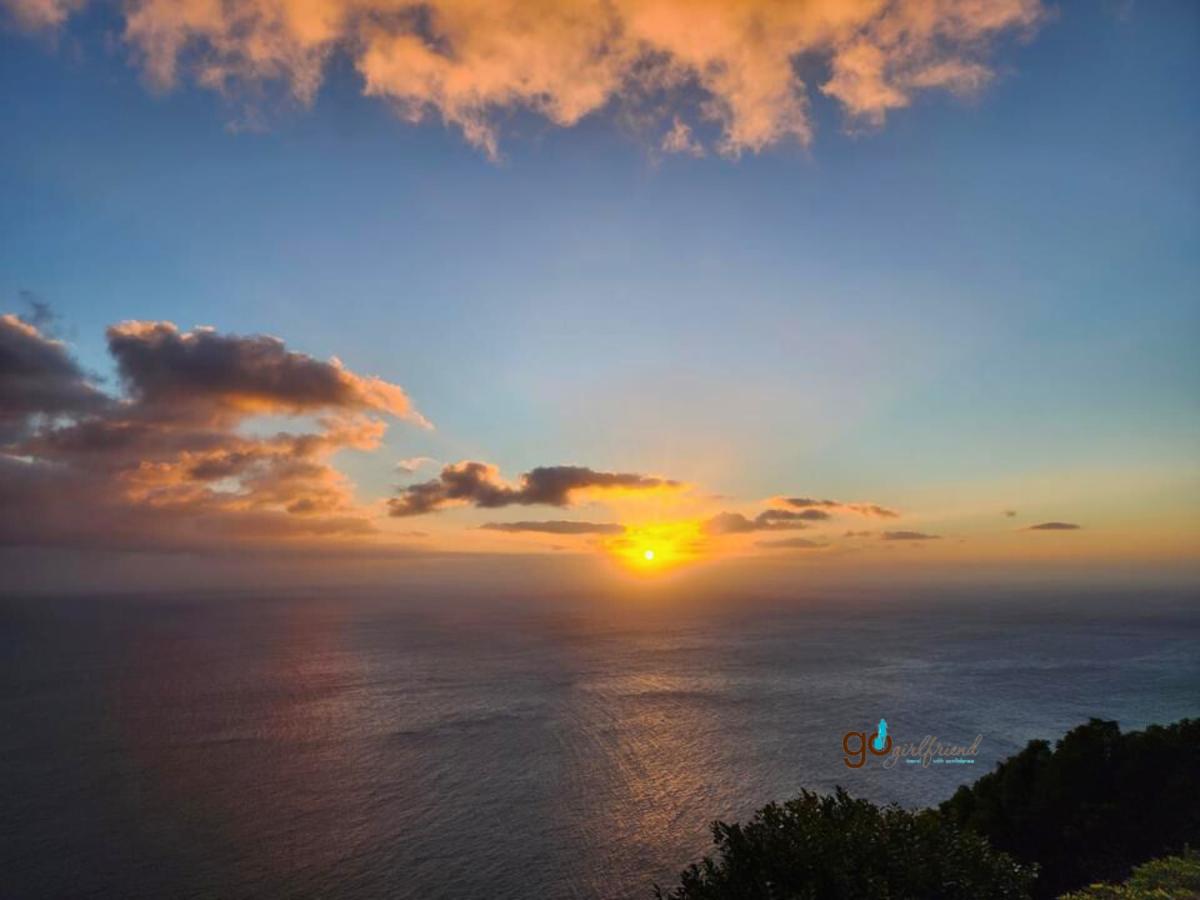
 Check your sunrise time and give yourself just shy of an hour to reach the Ponta da Madrugada lookout for sunrise. The drive is more windy than other roads on the island with some fun switchbacks as you traverse the eastern cliffs. May the horizon be clear for the sunrise!
- The oldest lighthouse in the Azores - Faro do Arnel is a stop to consider exploring. Park at the roadside car park and we recommend NOT taking your car further as the incline is very steep and smaller cars may have trouble getting back up. A good 15-minute slanting walk requiring a good heart workout to return to the car park after visiting.
 Having not had breakfast or coffee, head into small town Nordeste and visit cozy O Forno for fresh baked Portuguese sandwiches and pastries. Check out the Church of São Jorge directly across the street - the first church built on the island.
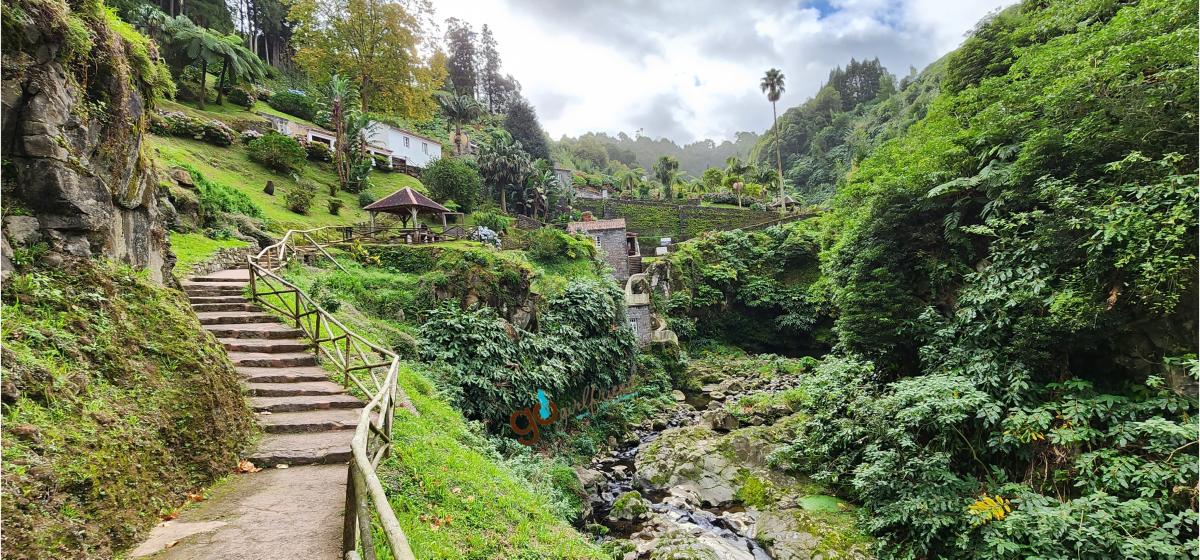
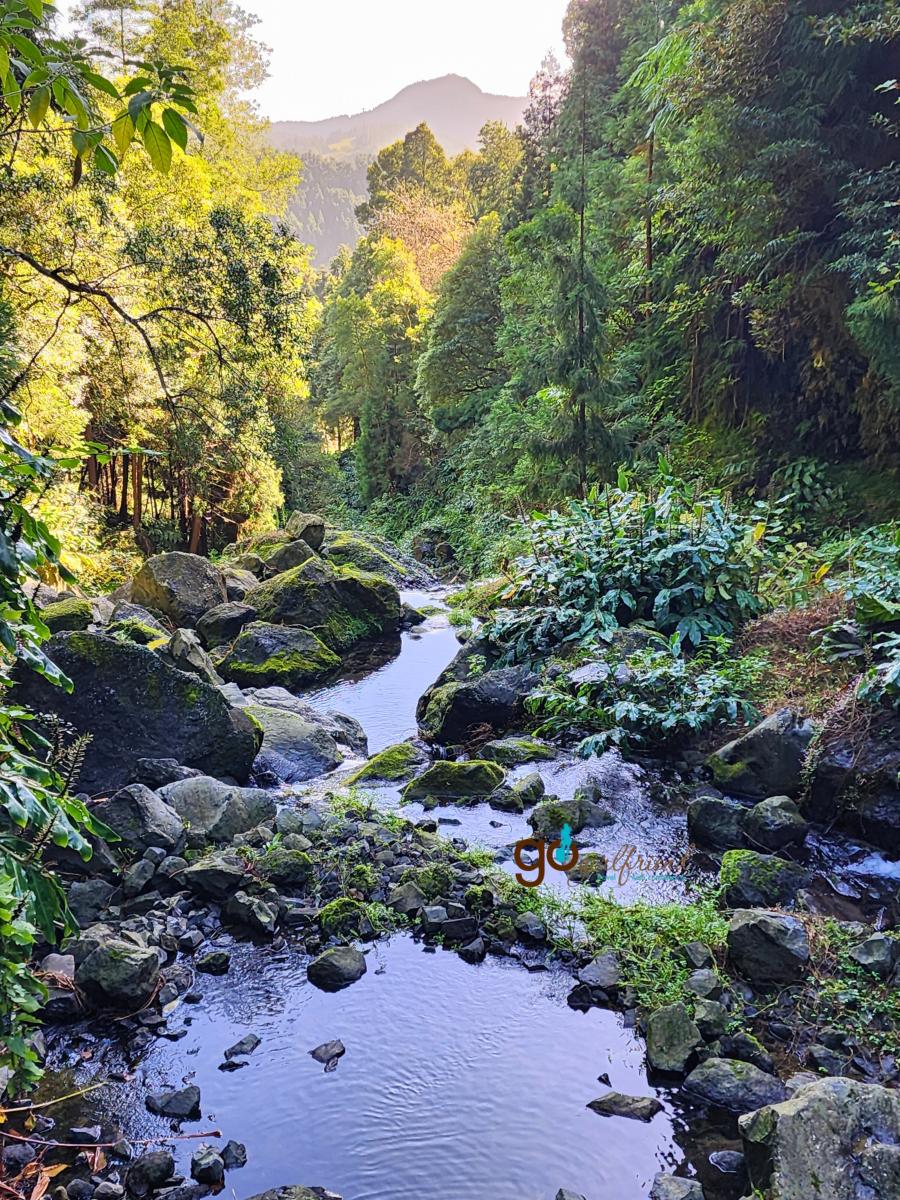
- Enjoy a short hike to two waterfalls and some breathtaking nature while exploring Parque Natural da Ribeira dos Caldeirões.
 From Alltrails … Ribeira do Caldeiroes Waterfall Route – a short 1 km hike into the valley to see two wonderful cascading waterfalls within the lush natural greenery.
- Meander your way back to Furnas and the Terra Nostra for some relaxing time in their iron-rich thermal pools or a wander through their diverse and lush botanical gardens.
- GoGirlfriend reminder: Booking a day or two in advance required! We recommend you sample the delicious Cozida Das Furnas stew actually cooked in the volcanic thermal vents. We recommend you stop by Tony’s Restaurant (one of the best cozidas in the area) to reserve your lunch in advance.
Day 3 ~ Exploring the Furnas Caldera
Google Map route itinerary: https://maps.app.goo.gl/yA9yoqZMm6tGZXCF7 (Drive time: 1 hr + time for stops)
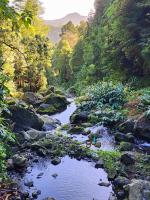 Spend your morning exploring Grena Park – a private nature preserve with waterfall hikes, steaming thermal vents, hot springs, a thermal lake and remnants of an old grand estate house on the property. Admission is $10 EU pp plus a small parking fee.
 - From Alltrails … the hiking trail to showcase the best of Grena Park.
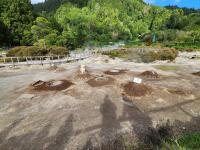
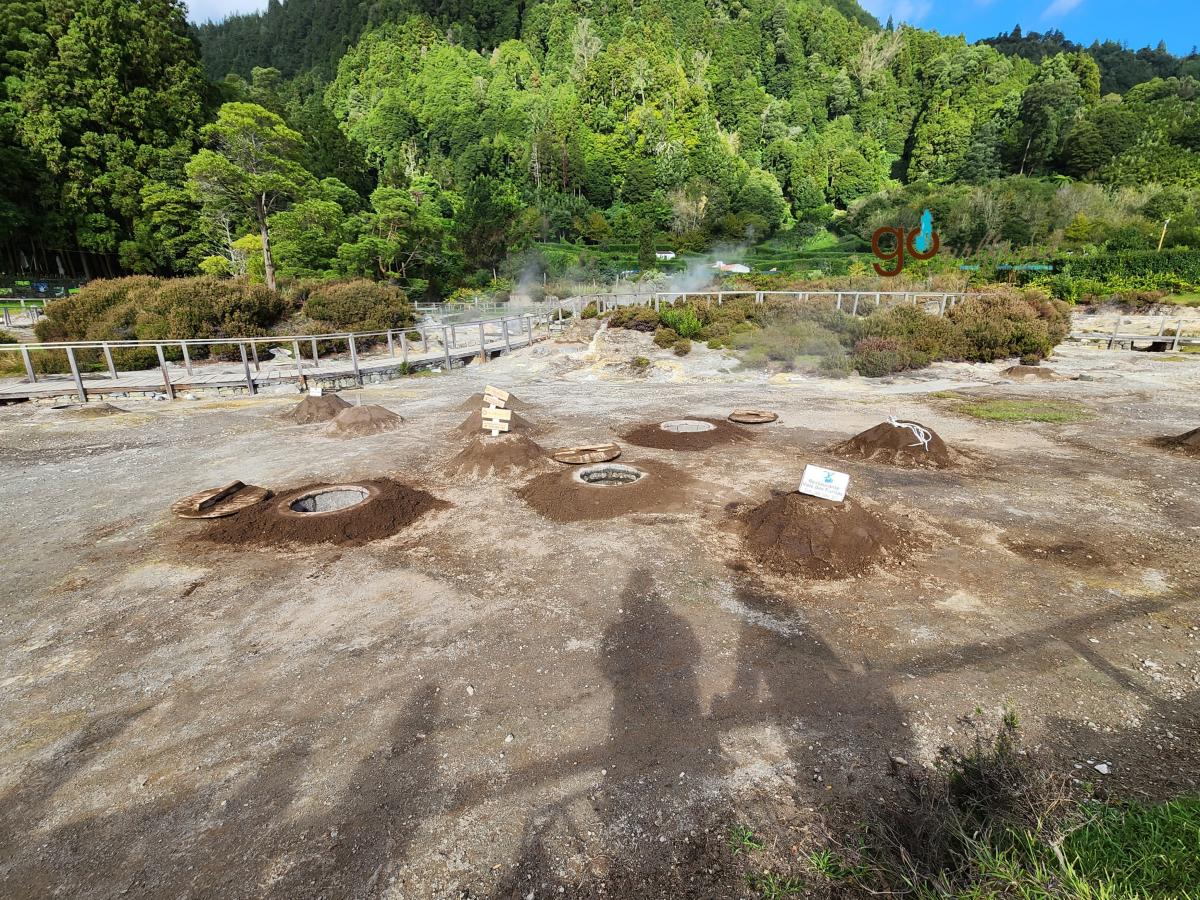
- GoGirlfriend special note: Directly on site at Grena Park are the volcanic thermal vents where many of the restaurants cook their Cozida das Furnas creations. You can see the restaurant signage to denote which vents are cooking which restaurants cozidas. Between 10 and 11am, you can watch as the stew pots are pulled from the vents, noting which lunch is yours in a few hours.
 If you didn’t get to visit the Capela de Nossa Senhora das Vitórias from the arrival day, now is a good time to drive to the opposite side of the lake and take a few moments to explore. The chapel sits on the southern shores of Lagoa das Furnas.
- A short drive to visit 2 miradouro’s (lookouts) overlooking the Furnas caldera - Miradouro do Pico do Ferro is a lookout directly above where you just hiked in Grena Park for views south and westward, Miradouro do Salto do Cavalo takes a different angle south and east.
- Return to Furnas for lunch with your cozida goodness.
- Explore the town of Furnas on foot and visit Caldeiras Vulcanias to see the variety of bubbling thermal vents.
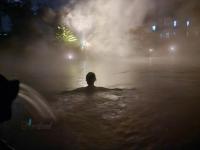 If you are staying at the Terra Nostra Garden Hotel, remember you can enjoy the iron-rich, thermal pools 24/7. As a non-hotel guest, visiting the Terra Nostra iron-rich thermal pools are a MUST DO to spend an afternoon soaking in the pool and walking the lush natural gardens. Admission is $10.00€ pp with access between 10:30am and 4:30pm.
- Alternately, consider the thermal pools at Poca da Dona Beija, also in Furnas. While smaller in size, it offers 5 thermal pools nestled in the tropical landscape. Admission is about $8.00€ pp.
- From your wandering Furnas on foot, we’re sure you’ve seen many restaurants that are teasing your dinner tastebuds … like Espinha.come closer to the Caldeira. So many to choose from!
Day 4 ~ West to Sete Cidades
Google Map route itinerary: https://maps.app.goo.gl/52WpeJPZ6twKevHY7 (Drive time: 4 hrs + time for stops)
We recommend you prioritize this day’s activity to a clear day to truly enjoy the spectacular scenery of São Miguel and the Sete Cidades Caldera.
Geology of the Sete Cidades Caldera – (simplified) Once a large stratovolcano atop the fault line separating the Eurasian plate (to the north) 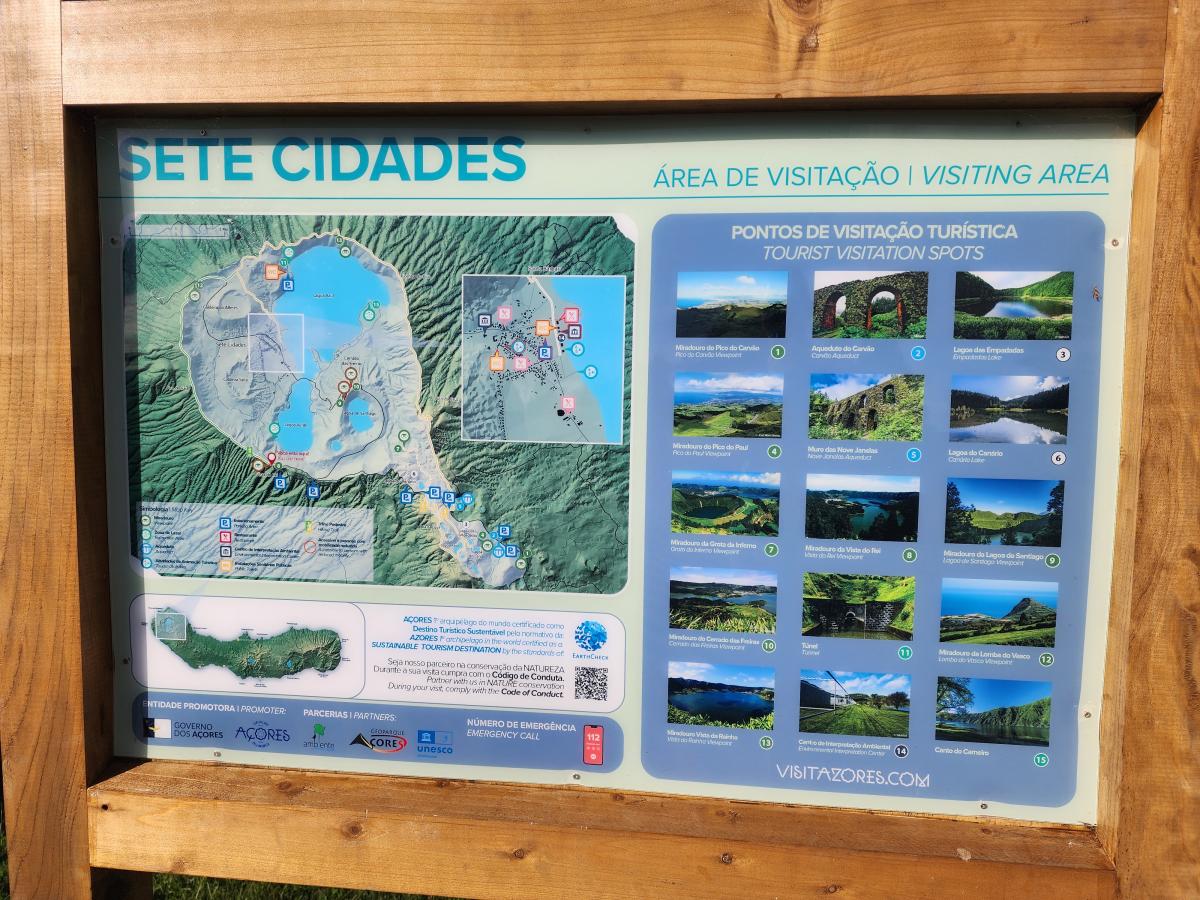 and the African plate (to the south), over successive explosions and collapses thousands of years ago, the Sete Cidades caldera was created. With the caldera rim nearly circular, the edges tower 300m (1000 ft) over the caldera floor and crater lakes making an impressive sight. As recent as the 1500’s, the caldera activity awakened and from a small volcanic explosion, the Caldiera Seca was born (the cone flanking the western edge of the town). It’s easy to see many lava domes, cones and lava flow patterns within and outside the caldera.
- We recommend an early departure (say 8:30am) to get a jump on the day as it is a longer day’s adventure.
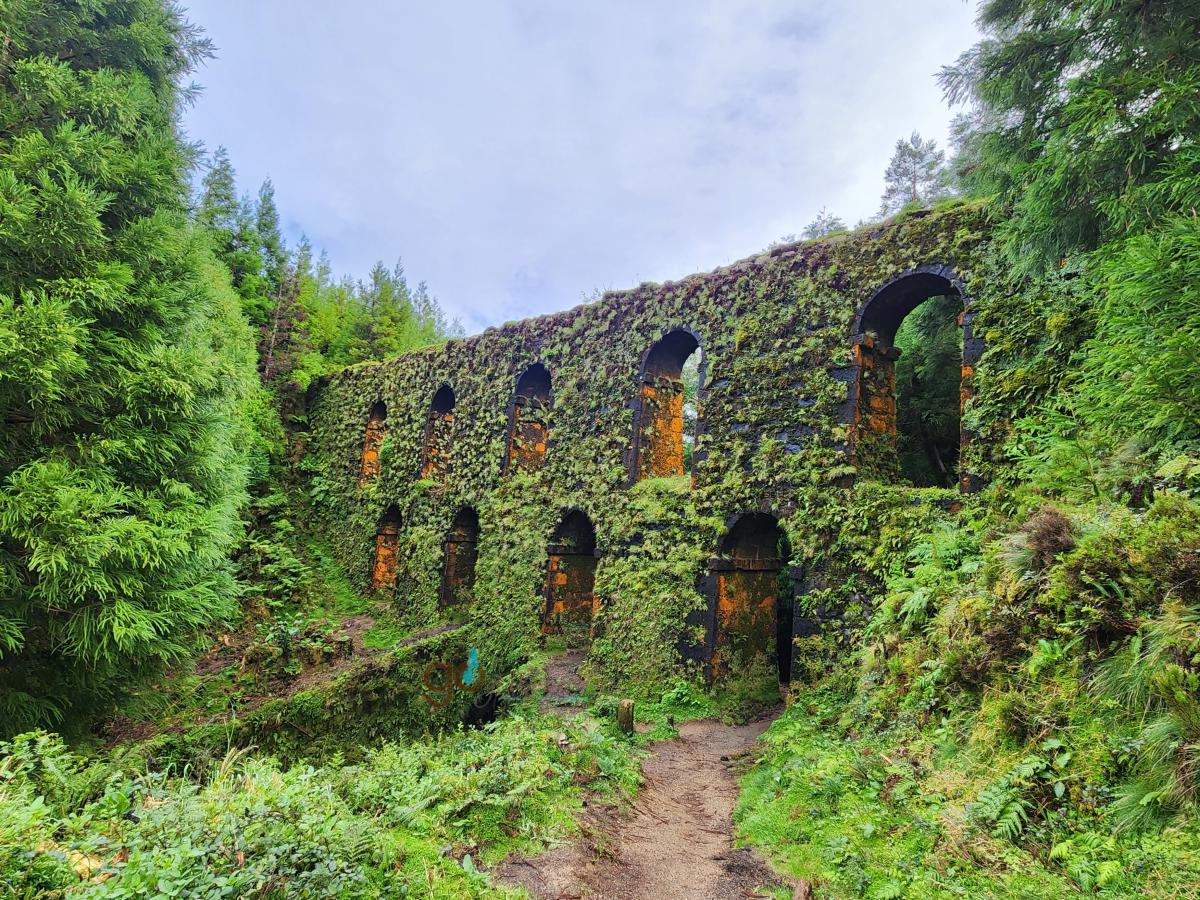
 Traverse São Miguel’s north coast through small towns and coastal seaside about 80 scenic minutes to the first stop - Muro das Nove Janelas – a picturesque, early 18th century aqueduct structure, grown over with lush green vines and foliage. About 150 meters (500 feet) before arriving at Muro das Nove Janelas is another span of aqueduct to stop at and admire the engineering of a few hundred years prior.
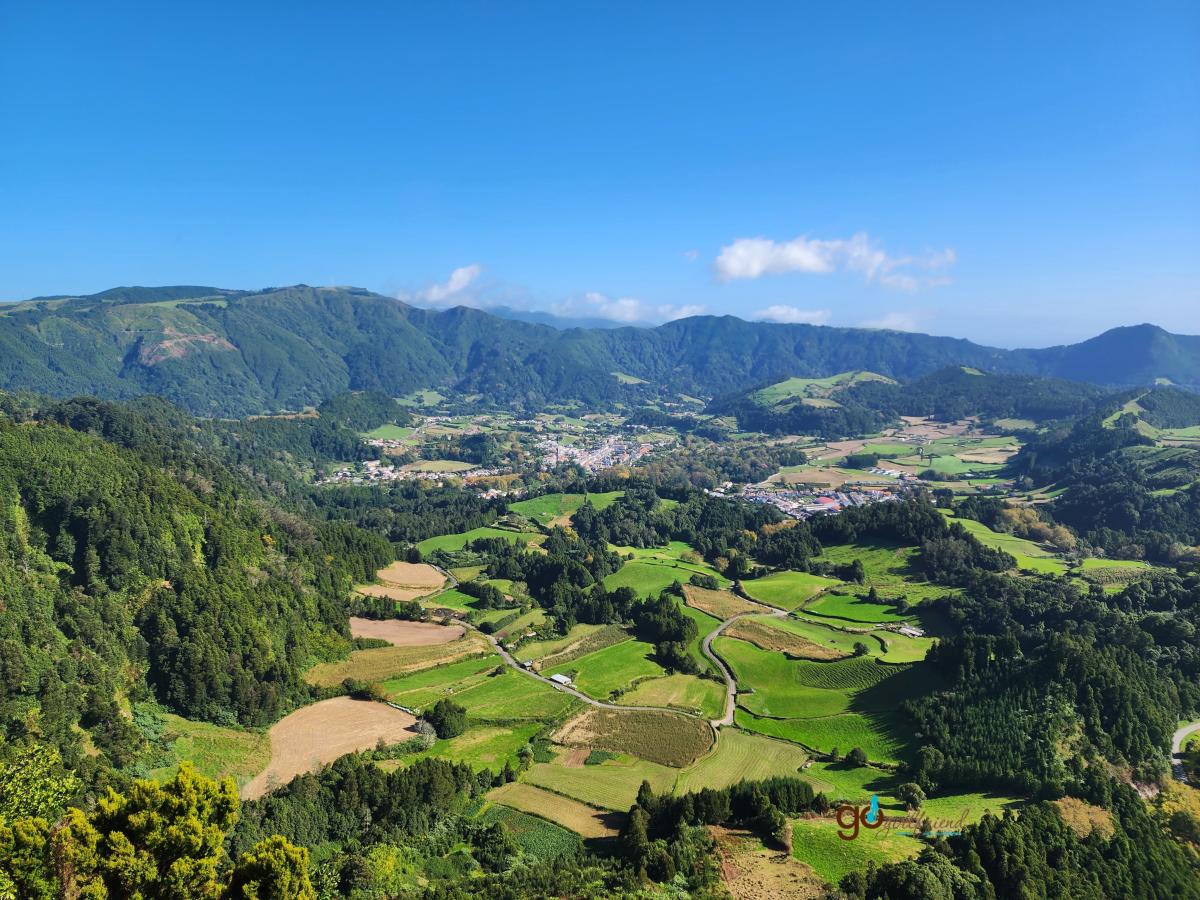
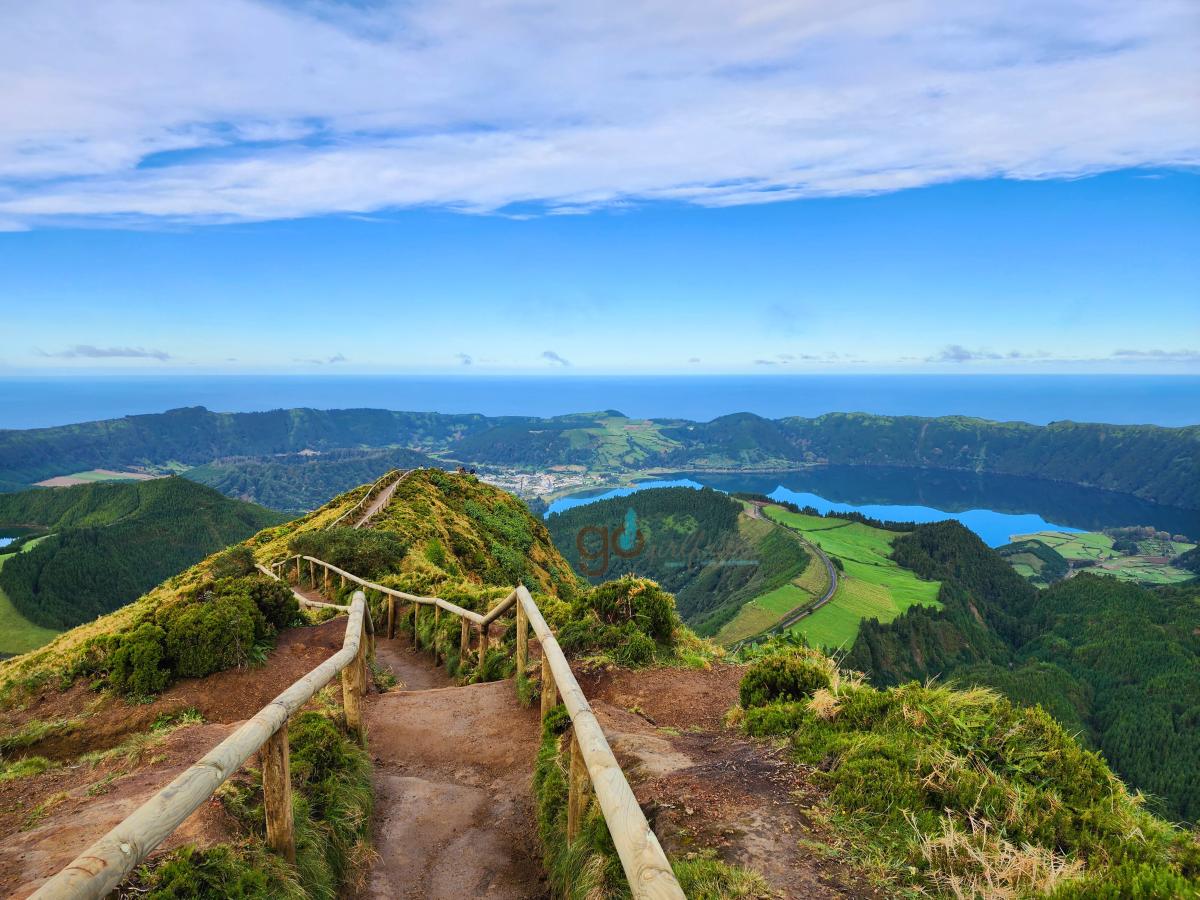
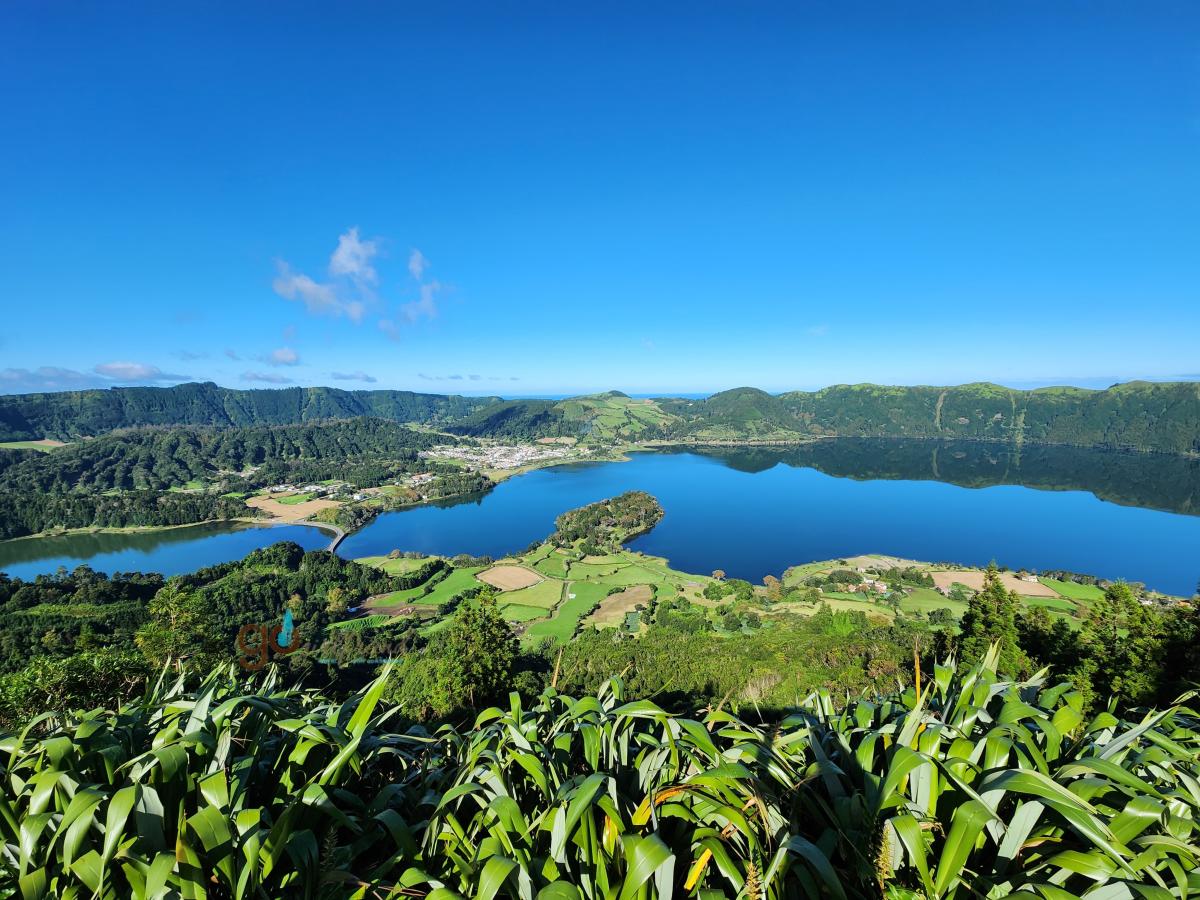
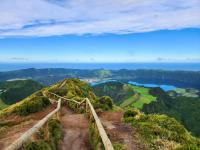 A MUST DO stop is the Miradouro da Boca do Inferno. A 15-minute walk in from the roadside parking brings you to an initial lookout of the Sete Cidades volcanic caldera rim about 300m (1000 ft) from the caldera floor. You aren’t quite there yet - continue along the path to the spectacular outlook and grander perspective of the entire caldera crater. Each step offers a wider reveal as you make your way closer to the formal lookout spot. May the day be clear for some amazing photos! Depending on the light conditions, you will hopefully notice of the two crater lakes – one blue and one green (from the angle where you are, the reflecting light of the blue sky makes the larger lake blue [on the right] and the greenery surrounding the second sunken crater lake of Lagoa Verde [to the left] making the waters look green.
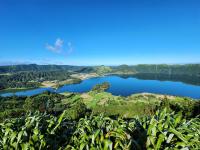 Descend the western caldera rim for lunch in the town of Sete Cidades stopping at the miradouro’s for some other perspectives of the crater lakes and surrounding caldera rim. The town is small and the restaurants are not abundant, but we found Casa de Cha “O POEJO” tearoom a stop for a light lunch of sandwiches and tea.
- Backtracking a few km up the southern caldera rim, we took a few hours in the afternoon to hike the perimeter caldera rim starting at Miradouro da Vista do Rei. The hikes’ vantages offered views of the interior of the caldera and coastal views of the outer crater rim with occasional cinder cones and lava flows evidence. From Alltrails … PR3 SMI - Vista do Rei e Sete Cidades, we hiked the first 5 km from the Miradouro and returned same path.
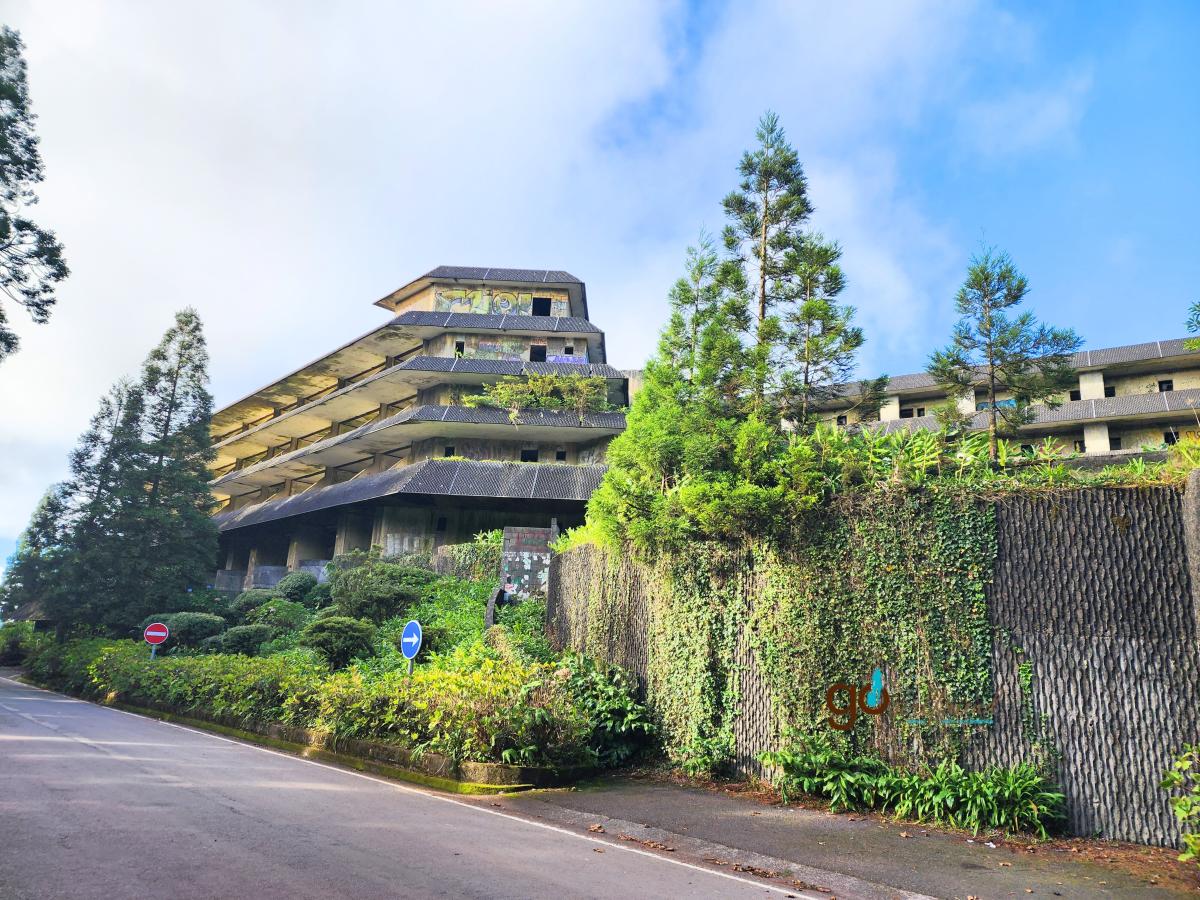
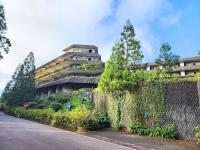 An interesting find here at Miradouro da Vista do Rei, besides the viewpoints, is the ruins of the Monte Palace Hotel. A luxury hotel built in the early 1990’s and only open less than a year, the remnants of the hotel sit perched high atop the caldera rim. Follow the road (opposite road of the one you drove up) a little and take a walk in the main gates to see the once grand lobby and building façade … creepy!
 Head back in and through the town of Sete Cidades with a quick stop at Igreja de São Nicolau – a small local church built about 1850 with a quaint tree-lined path leading up to the neo-gothic structure.
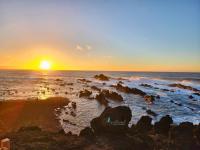
- Plan for a sunset drink waterside in Mosteiros to end your day. We chose the simple Seaside Vibez as our destination with amazing sunset perspectives and views of the volcanic rock features – like the Ilhéus dos Mosteiros and the linear, in-water rocks aligning with the fault line direction.
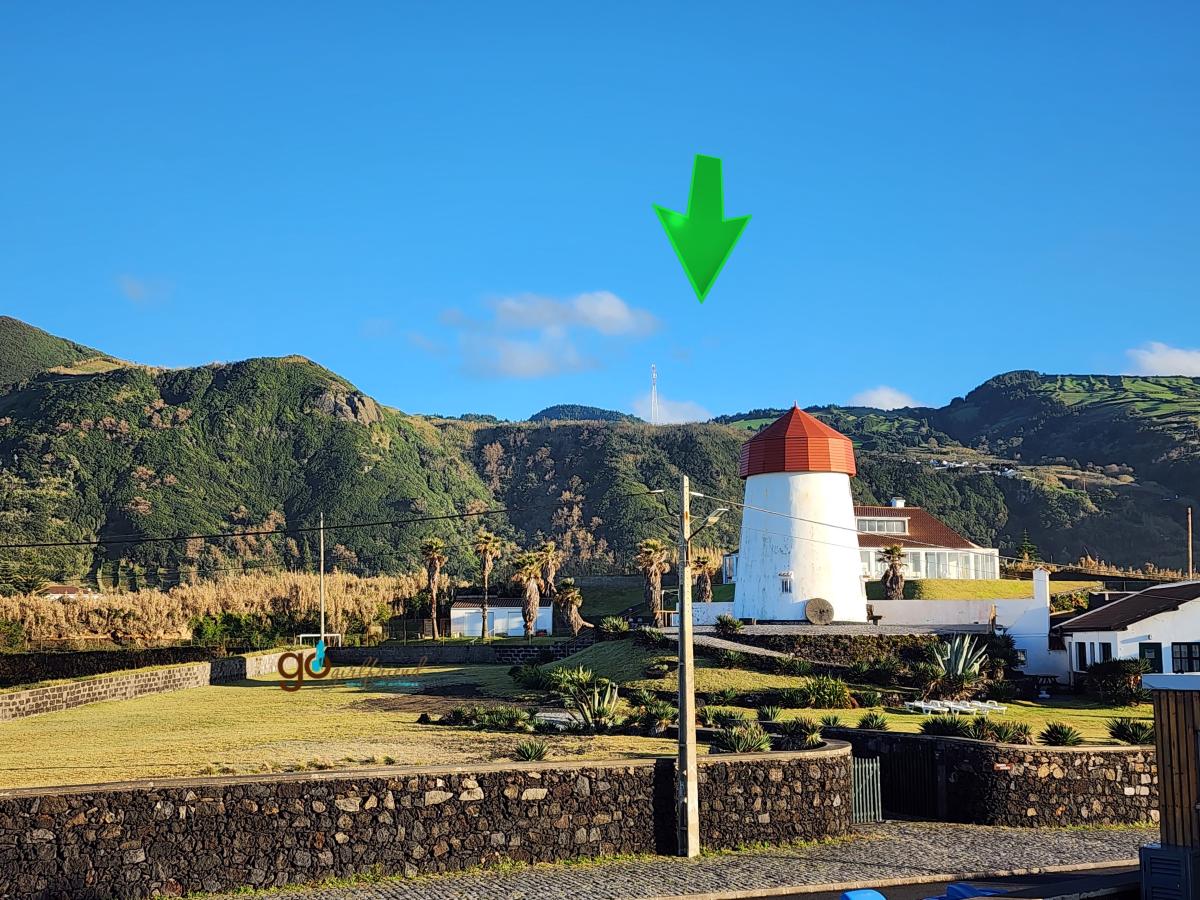
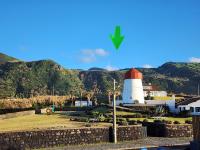 Cool note if you’re into earth sciences and effects of fault lines and tectonic plates. From the Seaside Vibez location, walk about 30m (100ft) north along the shore to get away from the buildings. Look back at the caldera rim. Along the ridge towards the “red-topped lighthouse” you will notice a depression about ½ km (1600 ft) wide. That is the graben effect of the fault line between the Eurasian plate (which you are on) and the African plate (where you were hiking earlier in the day). As the plates pull apart, the fault line, in this case, sinks in the gap – the effect is known as a graben ... pretty cool!
- After the sun has set and you’ve toasted to a great day (“Saude”) drive the southern coast back to your hotel. This nearly completes a perimeter drive of the island.
Day 5 ~ A cup of tea and a trip to see the Lagoa do Fogo Crater Lake
Google Map route itinerary: https://maps.app.goo.gl/qHd8Nun1urgQigPi8 (Drive time: 1 hr, 55 min + time for stops)
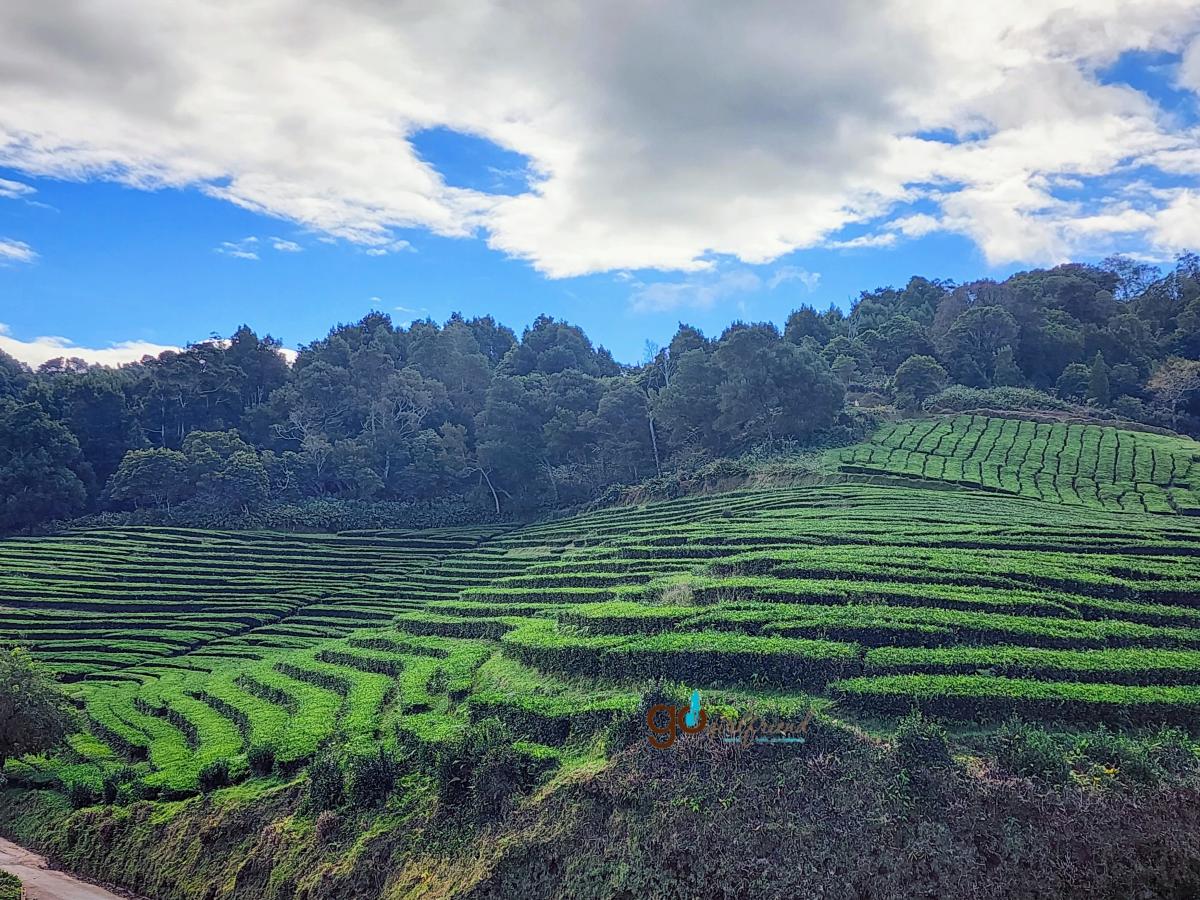
 First stop is a visit to Chá Gorreana (tea plantation) to see the entire process from field to production and sampling of their famous teas. A free tour (donation recommended) of the process and sampling with the ability to walk into the plantation fields is available to see the land use of growing tea within the natural environment. Expect to spend about 90 minutes here.
- Two miradouro’s offer views of the north coast – Miradouro de Santa Iria giving a great vantage of the coastline and agricultural usage and Miradouro do Cintrão with its cliff-edge views and the lighthouse edging the point.
- Head in to Ribeira Grande for lunch - we chose Alabote seaside and, after lunch, walked the beachline and in through the main street to shop the local shops.
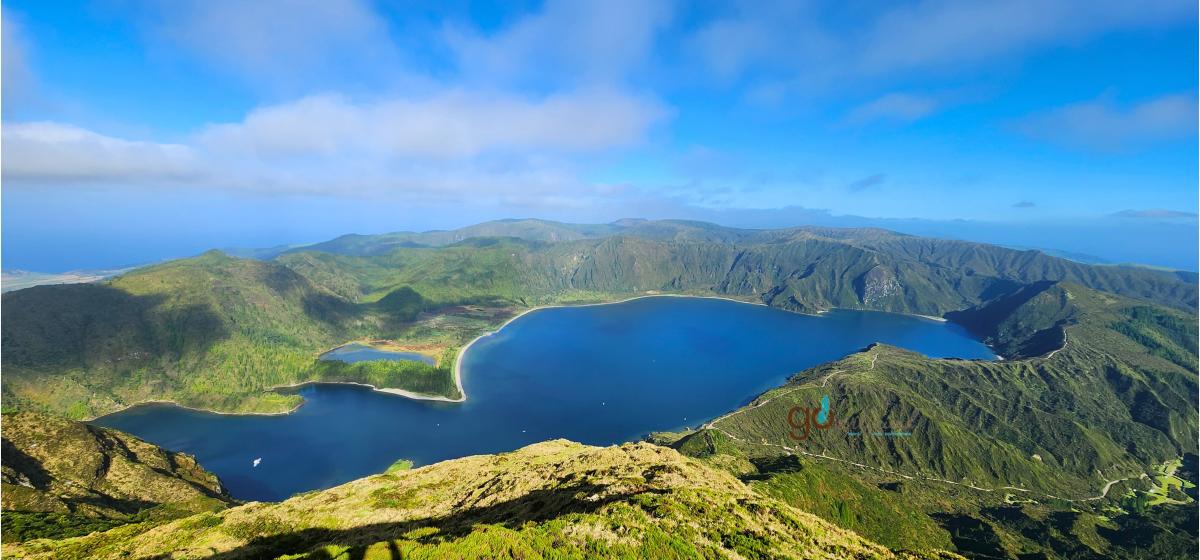
 Make your way up almost 1000m (3100 ft) to the Miradouro do Pico da Barrosa, with a view overlooking the Lagoa do Fogo lake. This lookout edges the Agua de Pau caldera that once too was a stratovolcano many thousands of years ago that exploded and imploded to create this crater, lake and caldera rim. From the upper car park, walk the path to the communications tower and beyond to get some great views of Lagoa do Fogo 350 m (1100ft) below. At the highest points, you can see both the north and south coast revealing how intimate the island truly is.
- Retrace your steps and stop for a swim or a visit to Centro de Interpretação Ambiental da Caldeira Velha, a lush nature center preserve with 4 thermal pools to enjoy.
- Back to Furnas to end the day and more time in the iron-rich pools at the Terra Nostra Garden Hotel.
- Remember those restaurants you debated on the other day? Which one are you choosing for dinner tonight?
Day 6 ~ the capital Ponta Delgada before flying home
Google Map route itinerary: https://maps.app.goo.gl/WWT1QRPuK3NoF3Wp9 (Drive time: 1 hr, 15 min + time for stops)
- Sad to be departing such a beautiful island and an earth sciences delight, but checkout of the hotel is the first order of business.
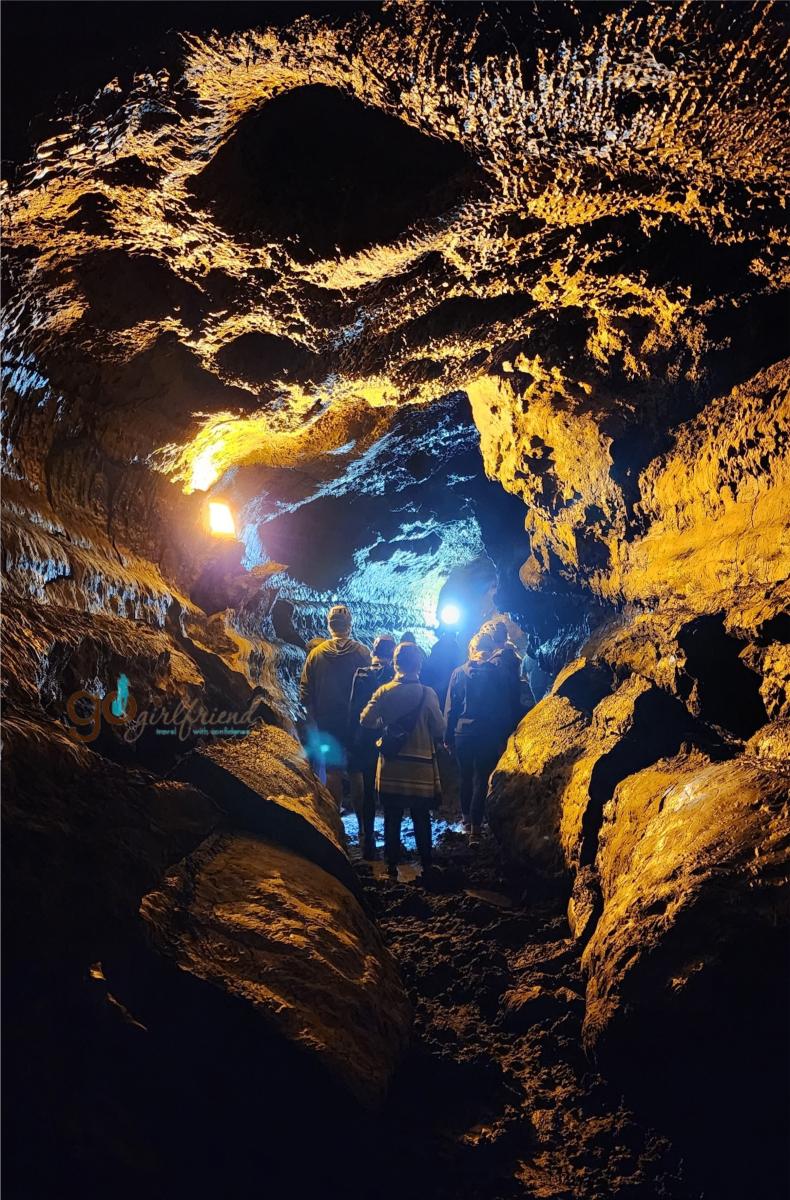
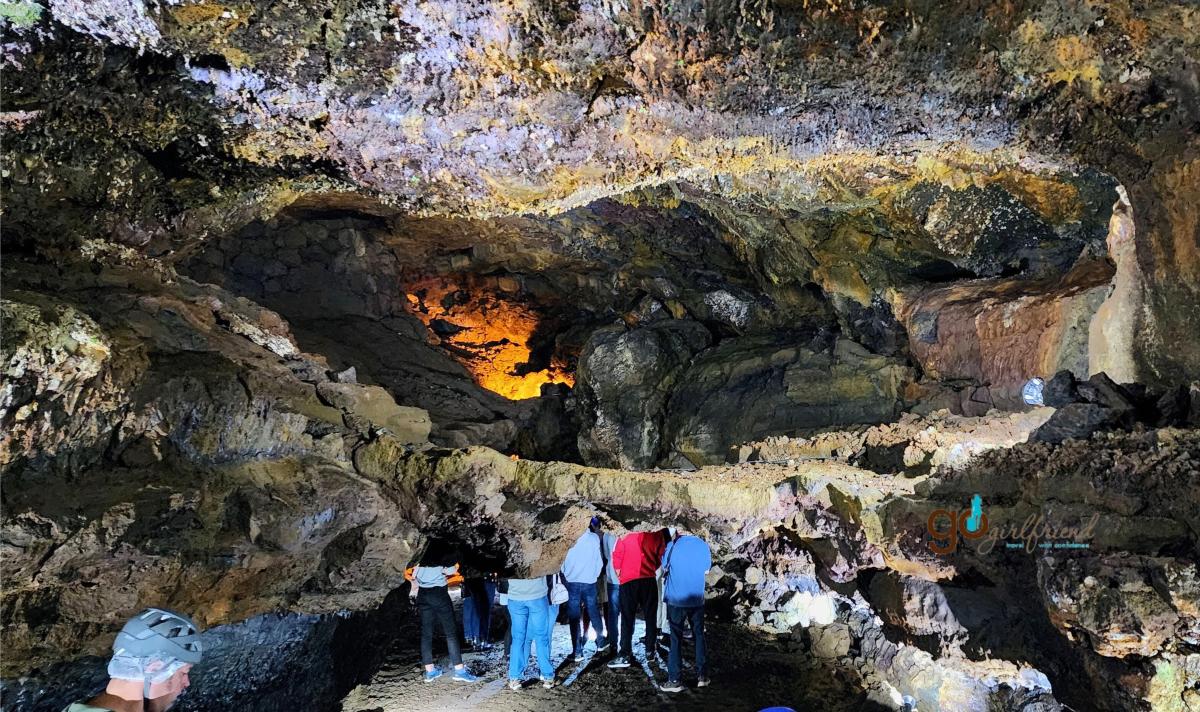
 The Gruta do Carvao “Caves” are first up to see today. These ancient lava tubes were formed as lava, from the Sete Cidades stratovolcano, once flowed to the sea. As the exposed surface cooled, the lava flow crusted over leaving the tube channel intact in many places. The Gruta Caves tour takes you into a safe 200m section of the lava tubes revealing all manner of stalactites, stalagmites, lava bridges and strata – quite a sight to round out the earth sciences experience on São Miguel. The Gruta Caves are also a UNESCO Global Geopark. Tours need to be booked in advance and admission is only $9.00€ pp.
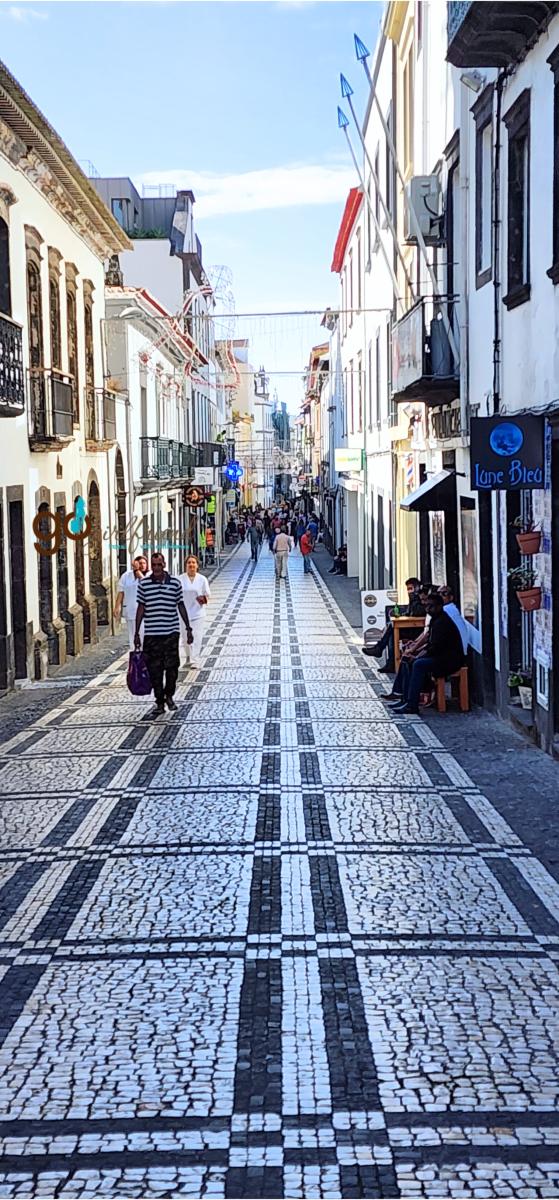
- Head to the waterfront to park and explore the capital of Ponta Delgada. Being a smaller island capital, almost everything within Ponta Delgada’s main central core is within ½ hour walk.
- Beginning at the city gates - Portas da Cidade, head to Igreja Matriz de São Sebastião, a historic 16th century church.
 Keep watch for the inlay patterns of the white stones amongst the black lava stone – very decorative and many unique designs.
- The Mercado da Graça (market) should help you explore local fruits, fish and cheeses followed by Igreia de Sao Pedro (a beautiful 17th century church).
- Wander through the old town core as you peruse restaurants for lunch (a great vegetarian find was Santo Seitan – and their hummus bruchetta was divine!) before finishing with the 16th century Convent of Our Lady of Hope with it’s beautiful gilted interior and Forte de Sao Bras (early 16th century fortress now Military Museum on the waterfront promenade).
 We characterize São Miguel of the Azores as a quiet beauty, lush in vegetation and farmland with an underlying raw volcanic power - volcanic caldera rims offer deep valley views, crater lakes offer a bubbling cauldron of thermal energy lurking not that far beneath the surface. Its thermal pools harness the earth’s heat energy and mineral elements offering healing and relaxation.
Interested in more information on our travels to Madeira and São Miguel of the Azores, check out our other posts offering more detail:
- Jump over to our GoGirlfriend Album on Facebook for a photo stroll
- Madeira 7-day sightseeing itinerary
- Visit Madeira Tourism
- Our comparison of these Atlantic jewels - Madeira and Sao Miguel of the Azores
- Visit Azores Tourism
- Madeira hiking – seaside to mountains, and levadas
- Sao Miguel, Azores hiking – calderas, tectonic plates and waterfalls
There’s lots to see and lots to explore, tell us what you hope to enjoy most? Have you been to São Miguel? We’d love to hear what you loved most! Drop a comment below and connect with us on Facebook, Twitter, Instagram or now Bluesky.







 Check out our
Post new comment